Connected vehicles deserve connected marketing
We spent years talking about the connected vehicle being the future. Now that connectivity is becoming standard, the bigger question is how B2B automotive brands turn increasingly complex products into ones their OEM customers can trust, integrate and use.
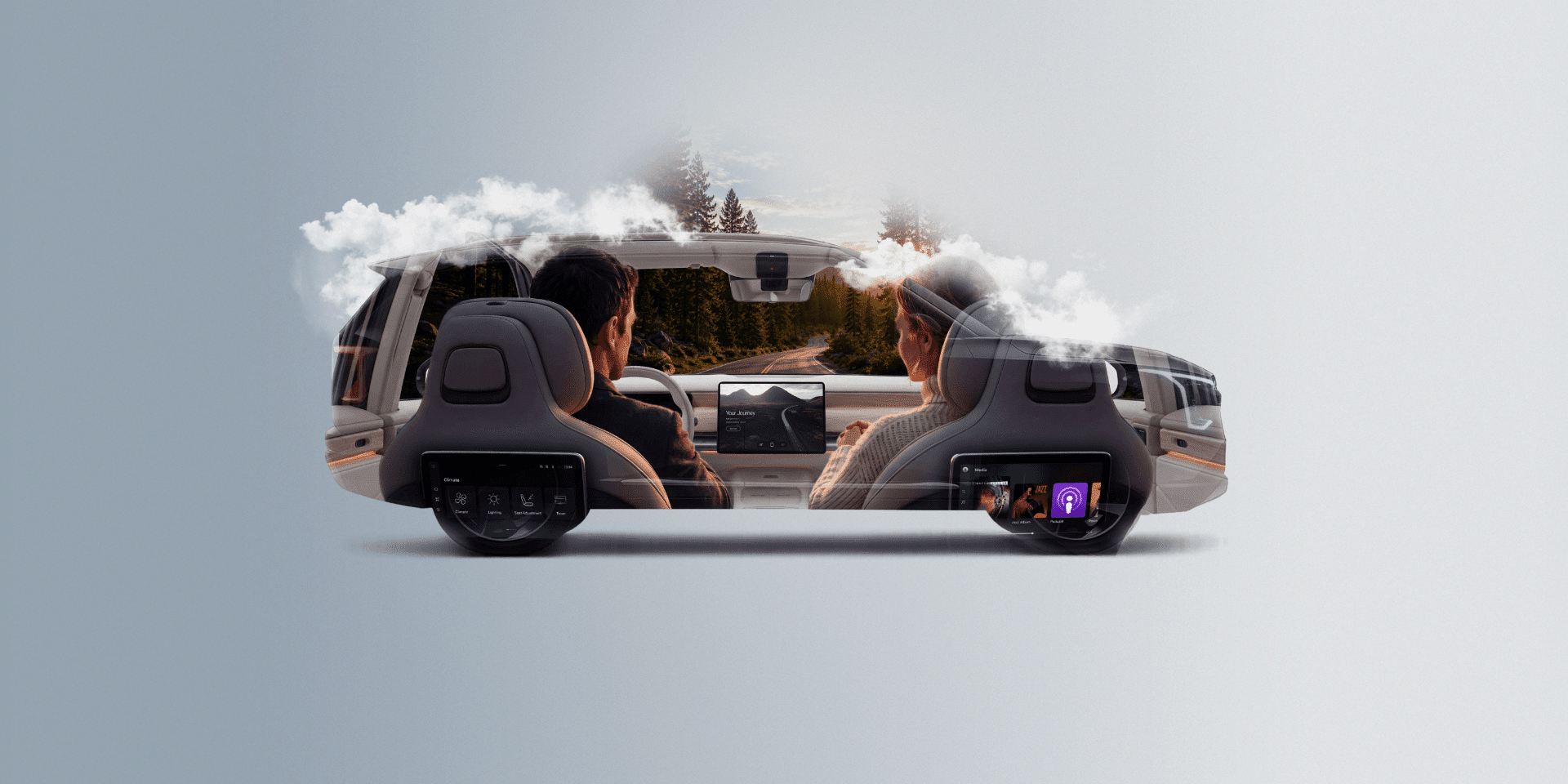
For years, the connected vehicle was one of automotive’s great promises.
Cars would talk to the cloud, and drivers would talk to their cars. Vehicles would diagnose their own problems, update themselves overnight and communicate with the world around them. Online and offline experiences would converge, safety would improve, and services would get smarter.
It sounded VERY exciting. Even, for those who remember it, a bit Knight Rider.
Now, much of it is simply… normal. In 2025, 83% of cars sold worldwide were equipped with OEM-embedded telematics. The active global installed base of connected cars with embedded connectivity reached 338 million, and Berg Insight expects it to pass 583 million by 2030.
Connectivity, in other words, is shifting from differentiator to default. And that changes a lot.

The vehicle is becoming something different
The change goes far deeper than putting Spotify on the dashboard.
More than 90% of automotive executives surveyed by Deloitte said that their firms were actively adopting software-defined vehicle technology, with 81% of OEM fleets expected to be software-defined by 2030.
The upshot is something much bigger than advancing technology. The software-defined vehicle changes what a car actually is:
- Features can be added or improved through over-the-air updates
- Connected services and digital cockpits can evolve and personalise throughout the vehicle’s life
- Fleet operators can optimise vehicles in real-time
- Insurers can develop usage-based models
- Manufacturers can potentially offer new features and subscriptions long after the keys change hands
The traditional lifecycle of a vehicle is being drastically reshaped.
Add increasingly sophisticated ADAS, sensor suites, edge computing and autonomous-driving technologies, and the connected vehicle starts becoming less like a finished product rolling off a production line and more like an evolving technology platform.
That creates enormous possibilities, but it also creates an enormous amount to connect.

Stitching it all together
Arnon Schafir, VP Automotive Data Intelligence & AI at Upstream, put this succinctly when he joined Fox Agency on the XTech Podcast recently. His perspective is that automotive companies don’t really have a data problem. They have a “stitching problem”.
Modern vehicles can generate huge volumes of telemetry, but understanding what is actually happening may mean connecting that information with the specific bill of materials for an individual vehicle, its software version, previous updates, environmental conditions, driver inputs, and other external data sources.
AI makes that enormously powerful.
Arnon went on to use a clear example: a persistent leaking sunroof that conventional testing had failed to explain. By combining information about the vehicle itself with telematics showing incline and wiper use, investigators could identify conditions the original test hadn’t reproduced. That insight could then feed back into engineering and design.
That is connected vehicle technology at its most compelling. Not another dashboard, and not AI for the sake of it. Instead, the chance to identify problems earlier, support engineers, reduce warranty costs and, ultimately, make vehicles safer.
From smart pilot to mass production
But that’s also where a tricky challenge emerges. A brilliant AI demonstration is one thing, but making it work reliably across millions of active vehicles is another entirely.
Arnon describes the challenge as moving from experimentation into mass production, where automotive teams may be dealing with petabytes of raw data and enormous differences between vehicles, systems and operating conditions. Even once the technology works, it still has to fit into the processes and tools people actually use.
And the more connected vehicles become, the more moving parts the ecosystem contains: OEM platforms, cloud services, AI, sensors, workshop systems, supplier technology, vehicle software, communications infrastructure and huge quantities of data.
And then there’s security.
A connected vehicle is also a connected endpoint. Software updates need to be protected, vehicle-to-everything communications need to be trusted, and data needs to be governed properly. Increasingly, these aren’t just technical challenges but compliance ones. In the UK for example, UN R155 cybersecurity and R156 software-update requirements became mandatory for new vehicle types in June 2026.
The future may be exciting. But it also comes with a HUGE integration checklist.
So how do you market all that?
For B2B automotive technology marketers, this creates an interesting problem. As the technology becomes more sophisticated, the buyer doesn’t necessarily need to hear more about the sophistication. Quite often, they need greater reassurance that it won’t create more headaches than it solves.
That means the strongest marketing message might not be about how many models an AI platform uses, how much data a system can process, or how many clever things happen behind the dashboard. It may be something much simpler:
- It integrates.
- It’s secure.
- It’s proven at scale.
- It works with the systems you already have.
- It’s ready to deploy.
The tricky job, though, is being able to say those things with credibility.
Automotive buyers are navigating long decision-making processes involving multiple stakeholders, complex technology stacks, regulatory requirements and significant operational risk. ‘Easy integration’ can’t simply be a nice line on a website. It has to be backed by architecture, compatibility, expertise and evidence.
The same applies to security and scalability.
Complexity underneath, clarity on top
The connected vehicle was once a tantalising glimpse of the future. But now, the future is the car you’re sitting next to in traffic.
The opportunity is enormous, but for B2B automotive technology marketers, perhaps the biggest lesson is surprisingly simple. The more complex the technology gets underneath, the clearer the story you tell on top of it needs to be.
Because in the connected era, it isn’t enough to sell possibility.
You have to make it feel ready for the road.