Softly does it: why vehicle design is now less about hardware
As OEMs simplify electronics and move towards zonal architectures, the real opportunity is shifting towards software, integration and services that create value long after the vehicle leaves the factory.
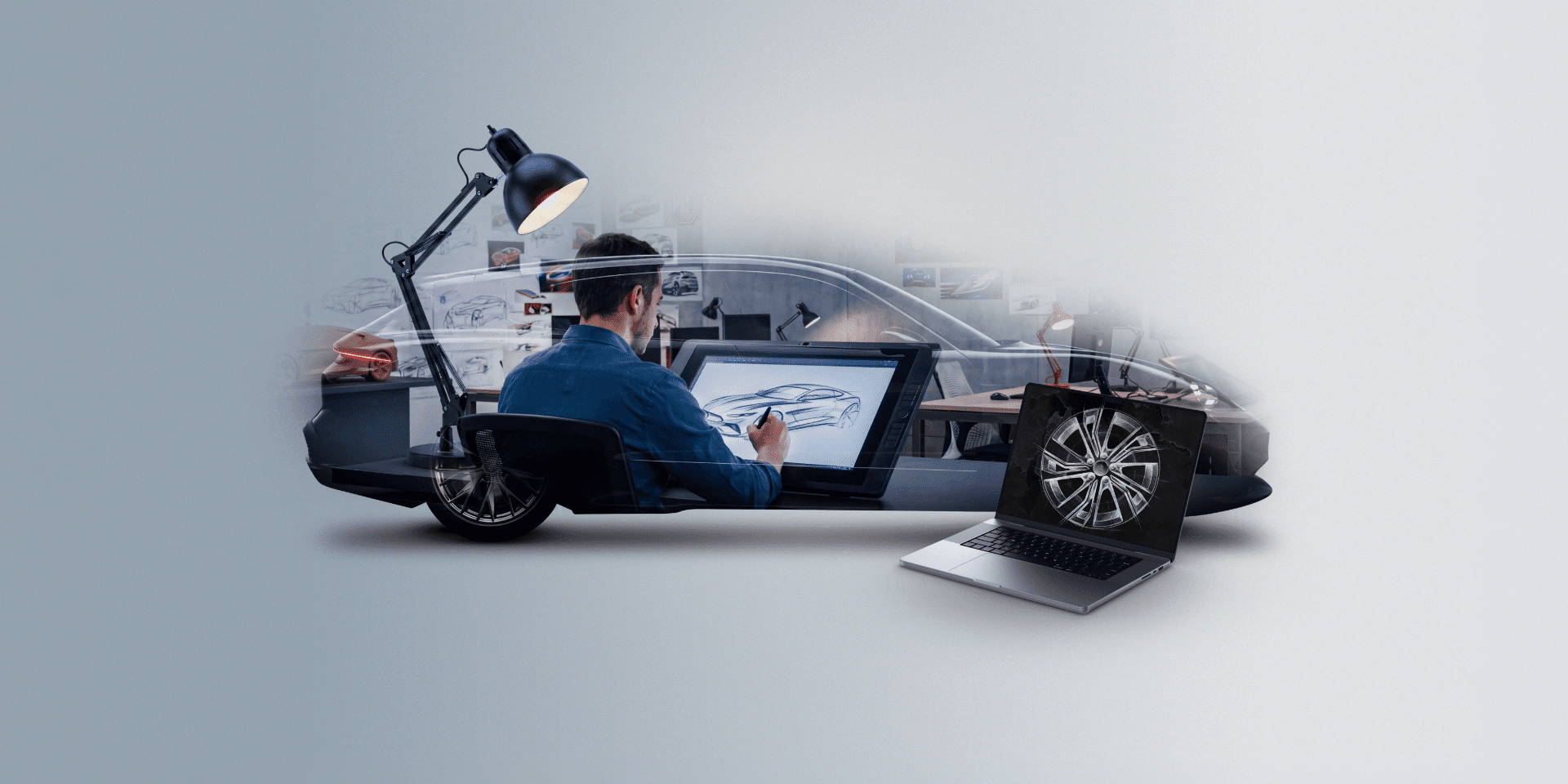
Like industrial open-heart surgery, vehicle design is evolving from the inside out. Fox Agency explores how zonal architectures, smarter software and fewer physical modules are reshaping the opportunity for B2B automotive marketers.
Remember the Ferrari Luce?
Maranello’s finest were slammed in 2026 for delivering an electric supercar that, according to its critics, looked more like a fleet car. The thinking behind it was interesting though: perhaps we were paying attention to the wrong bit. What was changing on the inside should matter just as much as the body wrapped round it. It’s a neat reflection of our times, because vehicle design IS changing – not just on the outside, where everyone can see it.
As OEMs move away from sprawling networks of individual control units towards more centralised, software-defined vehicles, the differentiating technologies are changing with them. Fewer boxes, less wiring, more software. And bigger questions about what connects to what.
So where does that leave B2B automotive marketers? For decades, adding more functionality meant adding more hardware. Lighting, braking, climate control, infotainment and the rest would each be handled by their own electronic control units. Keep adding features and, unsurprisingly, you keep adding ECUs – and complexity. Eventually, something had to give. So manufacturers are rethinking the whole model.
The IEA describes a new vehicle design paradigm in which conventional distributed electronic architectures are giving way to domain and zonal architectures, with a smaller number of ECUs connected to powerful central computers. The result is less wiring complexity and an architecture in which more of the vehicle can be defined, updated and improved through software.
This isn’t some distant engineering experiment. McKinsey estimates that domain and zonal E/E architectures could account for more than 75% of production by 2035, up from less than 30% in 2025. In other words, the wiring diagram is getting a serious makeover.

Where the opportunity is really happening
Zonal architecture is only part of the story. The bigger shift is what it makes possible.
Software-defined vehicles are starting to separate vehicle functionality from individual pieces of hardware. OEMs can consolidate applications onto more powerful computing platforms and keep developing them throughout the life of the vehicle.
And software is just the beginning. Centralised computing needs higher-performance processors. Zonal controllers need fast, reliable networking, power distribution has to get smarter, and connectivity must be flawless. And all of it has to function in a harsh, safety-critical environment. No pressure, then.
McKinsey believes 30% of vehicles produced globally could feature zonal controllers by 2032, while the automotive compute unit market could grow from $96 billion in 2023 to $148 billion in 2030.
Integration is becoming a major opportunity too. Fewer modules doesn’t necessarily mean easier engineering. In fact, quite the opposite. Then there’s what happens once the vehicle leaves the factory.
Centralised architectures make it easier to deploy over-the-air updates, fix software issues, improve performance, introduce new functionality and roll out security updates. The IEA also points to the growth of feature-as-a-service models, bringing the potential to generate revenue well beyond the original sale.
The opportunity isn’t simply to supply a smarter module: it’s to become part of an architecture that keeps getting smarter.
B2B automotive marketers, take note
For brand and messaging professionals deep in the guts of a complex industry, this changes the story in a big way.
If OEMs are thinking at system level, suppliers can’t afford to market purely at component level. A processor isn’t just a processor if it helps simplify an architecture. A networking solution isn’t just about bandwidth if it makes future functions easier to integrate. And software isn’t simply another line on the product sheet if it can help shorten development cycles or create value years after launch. The product still matters, of course. But so does the bigger job it’s helping the customer do. And that means the buying audience gets broader too; engineering, software, procurement and senior decision-making teams are all looking for different proof points.
One technology. Several audiences. Lots of different reasons to care.
And as OEMs consolidate functionality and increasingly make decisions at platform level, the stakes for suppliers rise. There may be fewer modules in the vehicle, but that can also mean fewer opportunities to win a place in it. McKinsey argues that Tier 1 suppliers will need to reposition themselves as thought partners in the development of zonal and central architectures, combining software capabilities with system-level expertise.
That’s an important shift for B2B marketers. No longer is it simply about announcing that our technology performs better. Instead, it’s about our technology helps you build a simpler, more scalable vehicle, integrate faster, and keep creating value for years.
And that takes more than a spec sheet.
It needs evidence, technical authority, and a clear understanding of the wider architecture. It needs messaging that can turn complex engineering into a reason to care. And it needs the ability to show not only what a solution does today, but where it fits the vehicles, platforms and services of tomorrow.